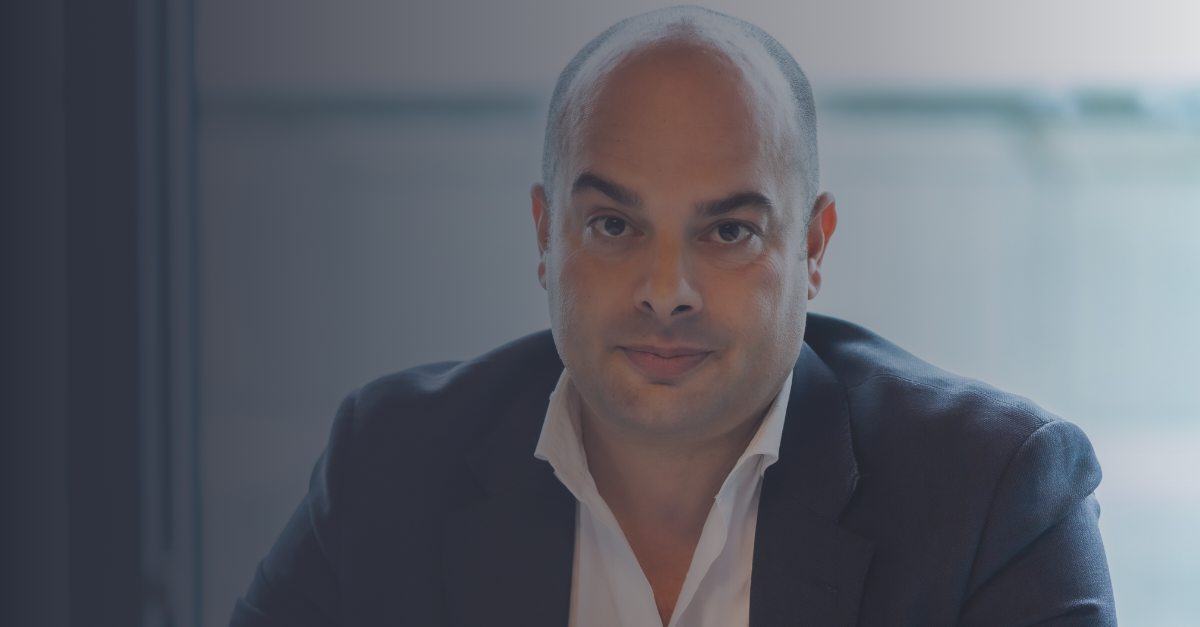
We spoke with COCUS Head of Innovation Filipe Coutinho, who has over 25 years of experience in IT and consulting, about innovation, corporate culture, and the trends shaping the future of business and technology.
1. How do you personally define innovation? Also in the context of an IT and consulting company like COCUS?
For me, innovation is not a separate department or a side project, but rather a survival instinct. It’s not about big laboratories or spectacular “moonshots.” Innovation means solving the customer’s problem on Monday morning in a way that no one has thought of before. In consulting, it’s like oxygen: you hardly notice it when it’s there, but its absence is fatal.
The most exciting breakthroughs usually happen on the fringes, where rules are weaker and curiosity is stronger. And it’s not pure novelty that matters, but relevance. A clever idea is nice, but a useful idea is priceless. This is precisely where COCUS’s strength lies: large enough to scale solutions, yet small enough to remain flexible. This is the environment in which innovation thrives.
My approach is based on recognizing patterns early on, transforming successful approaches into repeatable models, giving teams trust and freedom, and always working closely with customers and rather not isolated in a lab, but right by their side. At COCUS, innovation is not an add-on, but part of our DNA. In a world where technology moves faster than strategy, our goal is to create relevance across the board. True to our motto: “Connecting industries. Empowering innovation.”
2. You have more than 25 years of experience in IT and consulting. What key insights will you bring to your new role?
Those who have been working in consulting for a long time quickly learn humility. The customer has the problem, the team provides the solution, and trust is the link between the two. Everything else is secondary.
Technologies change rapidly, but the basic principles remain stable. Customers want trust, teams need meaning, and managers must translate problems into repeatable processes. I have seen many projects, both successful and unsuccessful, and almost always the difference lay in the same factors: discipline, trust, and people.
A key lesson is that success must be scalable. A solved problem should not remain a one-off project, but should be developed into a permanent offering. Trust is equally important. Those who solve a customer’s biggest pain point not only gain revenue, but also a long-term place as a partner. And last but not least, teams are the biggest multiplier. A motivated, committed team beats any strategy presentation.
I see the whole thing as a growth cycle: building knowledge, giving people goals that are worth striving for, and visibly recognizing achievements. This creates loyalty and sustainable growth. Companies win customers through projects, but retain them through trust and people. And at COCUS, as an “innovation speedboat,” every single person is crucial.
3. In your opinion, what does a company need to be truly ready for innovation?
Many companies confuse innovation with theater: Post-its on the walls, offsite workshops, and catchy slogans. Genuine willingness to innovate is based on two things: necessity and courage. Companies begin to innovate when stagnation becomes more dangerous than progress. That is exactly where many industries currently find themselves.
Necessity is the driving force: scarcity, competition, and economic uncertainty force change. At the same time, culture is decisive. Without a culture that allows failure, promotes diversity, and involves customers in the process from the outset, innovation remains superficial. Added to this is the highest level of technical excellence. Without engineering precision and a genuine desire to solve problems, innovation remains nothing more than a buzzword.
Today, risk avoidance is itself the greatest risk. That is precisely why companies need partners like COCUS wo act fast, pragmatic, and experienced to implement transformation together. Willingness to innovate is not measured by budgets or technology, but by mindset, necessity, and culture. The winners will be those companies that turn limitations into opportunities and adapt faster than everyone else.
4. Which trends and technologies are you currently paying particular attention to?
I evaluate trends and technologies based on whether they have the potential to reshape entire industries or even societies. It’s not just about optimizing processes, but about rewriting structures. In addition to generative AI, I currently view several other fields with particular optimism.
The Internet of Things is becoming the nervous system of the modern economy. Once everything is connected, control will shift from physical assets to data. The energy transition is another area with enormous implications. It is much more than just “green technology”; it marks the beginning of a new industrial revolution. Storage, decentralization, and renewable energies will profoundly change supply chains and geopolitical structures.
The world of work itself is also undergoing radical change. Hybrid models, AI-supported co-pilots, and distributed teams are changing how value is created and who has access to opportunities. At the same time, we are witnessing a fundamental transformation of the media. Platforms and algorithms now determine how societies think, whom they trust, and how they make political decisions. Attention has become the scarcest and, at the same time, the most exploitable resource.
Finally, space is also becoming a new economic arena. Satellites, private space projects, and new technologies are creating an additional layer of global infrastructure. What used to be science fiction now forms the basis for connectivity and competitiveness.
All these developments challenge existing hierarchies and call for completely new rules. This is precisely where innovation becomes crucial—not as an option, but as a survival strategy.
Innovation readiness: Why companies and industries need more courage
Today, innovation determines relevance and future viability. A successful approach can be seen where courage and culture give rise to real projects. You can find out how COCUS develops and scales solutions together with partners and thus creates measurable added value in the blog ‘Innovation readiness: Why companies and industries need more courage‘.