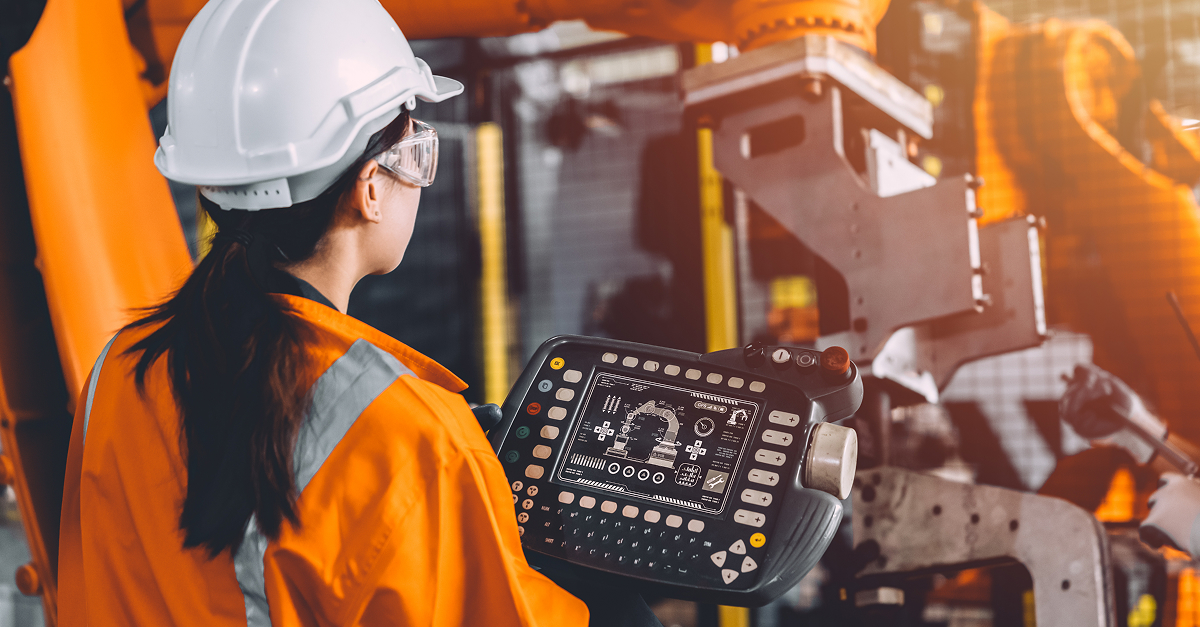
Produktionsmitarbeiterin bedient Roboterarm

Industrial Connectivity: When networks become a key factor in manufacturing

Industrial connectivity as the foundation of modern production sites

An autonomous transport platform delivers materials to the next production station, while cameras inspect production quality and Edge AI monitors safety-critical areas.
Scenarios like these are already part of everyday operations at many production and logistics sites. As a result, companies face the challenge of operating an increasing number of digital applications reliably and simultaneously. Automated guided vehicles, computer vision applications, Edge AI, mobile devices and connected machines continuously generate data and depend on stable communication. If communication fails or responds too slowly, processes can come to a standstill, quality can suffer or safety-critical applications can be affected.

However, this challenge does not exist in isolation. It is part of a broader transformation in manufacturing. Increasing levels of automation driven by Industry 4.0, the ongoing shortage of skilled workers and growing demands for transparency are changing production environments and forcing companies to further develop their processes and structures.

Digitalization is changing the requirements for communication networks

The challenge lies not in individual applications, but in how they interact and in the fact that existing networks are often no longer sufficient. More and more mobile devices need to be connected, resulting in a growing number of simultaneous data streams and larger volumes of data. At the same time, the entire communication network must operate in real time and with the lowest possible latency.

In addition, production facilities are becoming more flexible, machines are changing their locations and production areas are expanding beyond traditional factory buildings. As production processes increasingly span manufacturing halls, storage areas and outdoor spaces, mobile employees, autonomous vehicles and sensors must be able to access the same information at all times.
Communication networks are therefore becoming a business-critical component of the Smart Factory itself.

Communication Infrastructure Is Becoming a Key Production Factor

The impact of inadequate communication infrastructure often becomes apparent long before a complete network failure occurs. Even brief delays or unstable connections can disrupt automated processes, potentially resulting in production stoppages or delays in material flows. Automated guided vehicles need access to up-to-date positioning data, cameras need to transmit large volumes of data in real time, and mobile employees must be able to access digital information at all times. If interruptions or delays occur, individual disruptions can quickly affect downstream processes and reduce the efficiency of the entire operation.

The more production processes become digitalized, the greater the dependence on reliable communication. Connectivity is therefore evolving from a supporting IT component into a critical factor for productivity, quality and operational safety.

What does modern industrial connectivity need to deliver?

For digital processes to operate reliably, communication infrastructure must deliver much more than simple data transmission. Modern production and logistics sites require, among other things:

How can increasing communication requirements be met?
A private 5G network can meet these requirements. It enables reliable real-time communication, connects stationary and mobile systems within a shared infrastructure and creates the conditions for the secure operation of data-intensive applications.
A COCUS project on a large-scale industrial site demonstrates what this can look like in practice: An Edge AI-based camera system supports site security and preventive fire protection. Intelligent alarm rules enable the detection of unauthorized access, automated object tracking and the early identification of critical temperature developments. Image processing takes place directly at the network edge in compliance with data protection requirements, allowing safety-critical areas to be continuously monitored. All systems are securely connected via a private 5G network and can communicate with each other in real time.
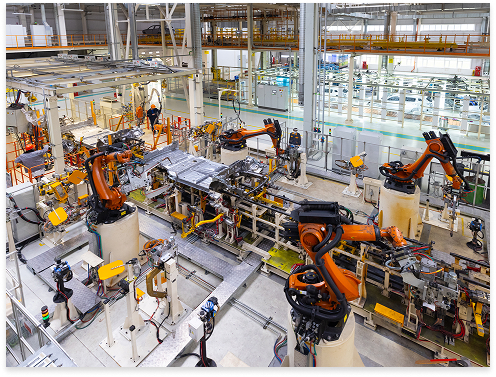
Produktionsstrecke in einem Industriebetrieb
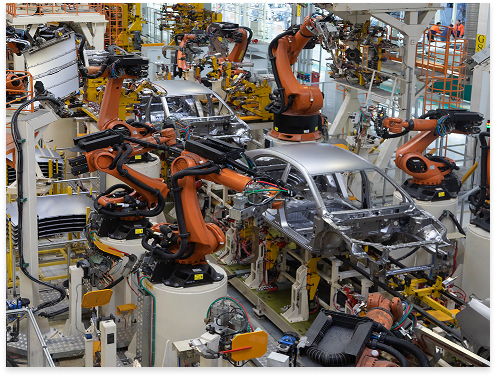
Fertigung von Autos

Connectivity as a success factor for the smart factory

As digitalization advances, the requirements for industrial connectivity continue to increase. A high-performance communication infrastructure provides the foundation for autonomous systems, Edge AI and digital production processes to work together reliably. Private 5G can help companies strengthen productivity, security and future readiness at the same time.

Become a leader in your industry – with solutions that drive real impact.

Share this post